Friday, May 6, 2011

I was wrong.

As you can tell by now, the ideas, thoughts, and opinions of others when it comes to nutrition are not well received by me. Just because you read something in a magazine, doesn’t make you a nutrition expert. I really can’t emphasize this enough.
When I’d hear or read anything regarding chocolate and its seemingly-equivocal health claims, I’d think, Psh. Yeah right. Eat chocolate to be healthy. YEAH RIGHT. THIS is why America is obese, because people think that things like chocolate are the solution.
Well, it turned out, for the first time ever, I misjudged the situation.
I was assigned to give a presentation about chocolate in relation to cardiovascular disease. It wasn’t my top choice, but I would have been happy with any of the topics. You can’t go wrong in a class called, Phytochemicals.
There are several different types of chocolate and I’ve broken them down for you in the following table:
Type:
About
Cacao
A seed (high in fat) from the cocoa tree fruit
Cocoa Liquor
A paste made from ground, roasted, shelled and fermented cocoa beans (% cacao on food packaging)
Cocoa Powder
The cocoa liquor with cocoa butter removed, making a powder
Dark Chocolate
A solid food made by combining cocoa liquor with cocoa butter and sugar; amount of liquor determines darkness of chocolate
Milk Chocolate
The addition of condensed or powdered milk to the chocolate mixture
Semi-sweet Chocolate
Referred to as ‘dark’ chocolate, but is only dark if it contains 35% chocolate liquor by weight
White Chocolate
Contains only cocoa butter (at least 20% by weight) combined with sweeteners and dairy ingredients
The polyphenols found in chocolate are what makes it healthy. Polyphenols are found in the cocoa liquor. The more cocoa liquor, or the ‘darker’ the chocolate, the better it is for you. Dark chocolate also has less sugar than the other chocolate varieties. Milk chocolate contains a fraction of the polyphenols, so it is not nearly as good for you. White chocolate has always been my favorite type of chocolate; it has NO health benefits.
Dark chocolate has been shown to lower blood pressure, lower your LDL-cholesterol, raise your HDL-cholesterol, decrease biomarkers for inflammation, decrease your risk for plaque build-up, and fight against free radicals.
That is a very simplified summary of what chocolate does to your body. My conclusion after completing my research is that chocolate really is a health food.
Before you go out and start binging on chocolate, there are a few disclaimers:
· Chocolate is high in saturated fat
· Chocolate is high in calories
· The more benefits are seen in the darkest chocolates
As far as the saturated fat goes, the saturated fat in chocolate is structurally similar to the fat found in olive oil, so it is not as damaging as other saturated fats.
If you eat ANYTHING in the wrong amount, it’s going to lead to weight gain. Chocolate should still be eaten in the portion of a dessert, not a vegetable.
If you’re going to eat chocolate, I recommend eating the darkest chocolate you can tolerate. I would choose a dark chocolate that is sweetened with dried fruit pieces. The dried fruit will have different polyphenols than the chocolate and will likely have a synergistic effect on protecting your body from free radicals and developing heart disease.
And remember, nothing gives you optimal health like a healthy diet AND exercise J

Friday, April 29, 2011

Where would I be without Crystal?


My best friend in the whole world always keeps it real. She has taught me many valuable life lessons, one of them being accepting people and situations for the way they are.


I was planning on blogging about exercise today, but as I was working on a research paper I came across the statistics on heart disease. The numbers gave me anxiety.

I don't understand why people choose to be so unhealthy.

As you’ve probably heard me say many times, heart disease is the leading cause of death in men and women in the United States. In 2006, 631,636 people died from heart disease, accounting for 26% of deaths in 2006. An estimated 785,000 Americans have their first heart attack each year. Another 470,000 who have already had one or more heart attacks will have another attack.

Risk factors for heart disease include inactivity, obesity, high blood pressure, cigarette smoke, high cholesterol, and diabetes. Stress also plays into it.

And now you’re thinking, well maybe I’m a little stressed and overweight… not as active as I should be, but I don’t have high blood pressure, high cholesterol, diabetes, and I don’t smoke, so I’m fine!

Well that may be so, but when’s the last time you went to the doctor? Do you know you don’t have high cholesterol?

But who has time to go to the doctor?

Avoiding the problem doesn’t fix the problem. Avoiding the problem leads to you being another statistic; having a heart attack and/or being dead.

Lifestyle changes are always hard at first. It just takes a little motivation, discipline, and perseverance. Anyone can do it if they really set their mind to it. Don't stress about what you've done in the past and just know that you can make good choices everyday to make sure your future is everything you want it to be.

However, I’m just keeping it real with myself and I’ve accepted the fact that most people, for whatever reason, are not going to put forth the effort to take care of themselves, but you don't have to be one of these people :)

I would like nothing more than for everyone to live a happy and healthy life.

That’s all. Have a good weekend.

P.S. I feel like it’s very important for everyone to realize that being a vegetarian will not save you if you are obese and don’t exercise.

Saturday, February 5, 2011

If you want to impress me

I have been jaw-dropping impressed by a man’s body once in my life. I remember it well. I was living in Tennessee and a bunch of girls went to see The Prestige…and in this one scene, Hugh Jackman literally took my breath away. I’m not saying I’m hard to impress, it’s just incredibly unusual for muscles to impress me. I have a friend who really appreciates muscular men. From time to time she’ll point out guys she finds really attractive. I just smile and think to myself… that guy is obviously a self-absorbed a-hole. I know it’s a hasty generalization, but seriously, men who have HUGE muscles are usually too busy looking at themselves in the mirror to even realize that there are other things going on in the world.
These super macho muscular men are usually obsessed with protein supplements. I don’t like protein supplements for two reasons. First, I like keeping things natural. Secondly, I cannot imagine that taking protein supplements long term can be good for your health, not to mention it’s likely to be indicative of certain personality traits. Let me elaborate.
First of all, let’s begin with how much protein you need in a day. The average healthy person needs 0.8g of protein/kg. SO… if a man weighs 150 lbs and is not a body builder, he needs about 55 grams of protein a day. This is easily obtainable through diet (even a vegetarian diet!). Anyway, when you begin weight lifting, your protein needs go up to anywhere from 1.0-1.7 g PRO/kg; that 150 lbs man would need 68g-116g of protein if he started weight lifting.
So now you’re thinking, see! You need more protein! Well hold on to your britches, I’m not done yet. If you were to eat this in a day:
· Breakfast: 1 med sized apple, 1.5 cups cheerios, 1.5 cup non-fat milk
· Lunch: Turkey Sandwich (2 slices of turkey, 2 slices of whole wheat bread) 15 baby carrots
· Dinner: 1 med baked potato, 1.5 cups chili beans
That gives you only 1615 calories and a whopping 71g of protein! And seriously, if you’re a male, you know you eat more than 1600 calories, meaning you’re probably getting more than 71g of protein a day, meaning you probably don’t need to be taking protein supplements to build those great big manly muscles.
So what’s wrong with taking protein supplements? Well, as far as the studies show, nothing is wrong with taking the recommended doses. However, I think supplements of any kind should be taken sparingly. Virtually the only supplements I promote are vitamin D and omega-3s. Calcium supplements are important for those prone to osteoporosis. As far as multivitamins go, go ahead and take one, but is it necessary? Not if you have a balanced diet.
Protein is so easily obtained in your diet that there is absolutely no reason to go out of your way to supplement it. I also think the source of protein should be taken into consideration. Getting your protein from plant based sources will provide you with lots of vitamins, minerals, antioxidants, phytochemicals, and fiber! Getting your protein from supplements is going to give you a whole bunch of rubbish that you can’t even pronounce (read the ingredients).
As I said, there are no long term scientific studies stating that protein supplements are in any way detrimental to your health when taken in the correct dosage. But when we eat excess amounts of protein, our body produces more urea, which must be filtered through the kidneys. Now this is purely my speculation, but when you overuse ANYTHING for an extended period of time, it’s more than likely going to get worn out faster. Overloading your body with excess protein, vitamins, and minerals may stress your kidneys or overwork them, especially if practiced over a number of years. If you insist on supplementing, you should at least try to drink plenty of water to help filter everything out.
People supplement protein so that they can have “better athletic performance.” Why can’t you get that protein from regular food? The average protein supplement gives you about 25g of protein, which hopefully by now you realize isn’t necessary when you’re eating three meals a day. However, having a high protein snack after lifting has shown to enhance training results. If you want a high protein snack after weight lifting try one of the following
  • Low fat cottage cheese and fruit
  • Low fat yogurt
  • Hummus and carrots
  • Peanut butter and celery (be careful with peanut butter, it’s really high in calories
  • Peanut butter on a slice of whole wheat toast
  • A simple glass of milk (soy is preferable)
  • 1 oz of mixed nuts
Other high protein foods include
  • Lentils and rice
  • Beans and a whole wheat tortilla
  • Oatmeal
  • Tofu and vegetables
  • Chili and cornbread
Earlier I said that protein supplements are indicative of certain personality traits. When someone tells me they’re taking protein supplements, I often too quickly write them off as “one of those.” One of those who feels their body is inadequate so they have to take protein supplements to have a “nice” body. I know I’m stereotyping, but jocks get stereotyped for a reason. In fact, I find muscles to be a huge red flag. Muscular guys are often stereotyped as being mean or dumb, and if I have to choose between intelligence and muscles, intelligence is going to win every time. It’s like; oh you can bench press 200 lbs?! Awesome, what
an accomplishment, but do you know the rate limiting steps in glycolysis or who you’re going to vote for in the next presidential elections? Because that is something actually worth talking about. It’s cool that you can do a one-handed push-up, but can you do anything else?
So what’s the take home message? Protein supplements really aren’t necessary, and they might hurt you if used consistently over a number of years. Get your protein from good sources likes beans, nuts, whole grains, and vegetables. You can easily get enough protein from your diet. If you’re still convinced that you need supplements, at least drink a lot of water. And please understand that I’m not hating on exercise. Exercising is really important for your health. Strength training will help improve your muscle mass which will help you when you’re old and brittle. I’m just saying exercising your brain is equally important.

Tuesday, August 10, 2010

Eggs: Friend or Foe?

I hope I see the day my roommate dies. She started it AND she’s waiting for me to die too.My roommate is also a future dietitian. We agree on most dietary issues, but we do have our disagreements. She tends to sway strictly vegan, while I tend to be slightly more liberal… open-minded… some may even say…reasonable. One of our biggest disagreements is on the consumption of eggs. She does not believe that eggs should be eaten. Ever. While I believe that eggs have a healthy place in a balanced diet.

One day I was making a delicious 1.5 egg omelet (1 whole egg and 1 egg white) with spinach, cilantro, onions, and tomatoes. My roommate walks in the kitchen, looks at me, and laughs. “What?” I ask. “I was telling my boyfriend that I’m going to live longer than you because you eat eggs.”I laugh. “Huh. Well, we’ll see about that.”“May the healthier one live longer,” she adds. “Yes, may I,” I reply.

Little does my roommate know, competition runs in my veins. I come from a lineage of bad losers and even worse winners. The first time I played Mario Kart on Nintendo 64, my brother, David, made me cry because he completely demolished me. This may appear hypersensitive, but you do not know my brother. David could make Hitler cry. When my family plays foosball our living room becomes a war zone. We also play ping pong, tennis, chess, checkers, and sometimes we straight up wrestle until the other one shamefully begs for mercy. Needless to say, when someone challenges me to the death, I’m going to win.

Eggs have acquired a bad reputation for primarily one reason: egg yolks are high in cholesterol. With heart disease being the number one killer in America, blood cholesterol levels are something that should be monitored. What people seem to be unaware of is what alters your blood cholesterol levels. Saturated and trans fat have more effect on raising your cholesterol levels than dietary cholesterol.

Eggs contain 212 mg of cholesterol, which is 71% of your ‘daily value.’ I must admit that this ‘daily value’ is misleading because cholesterol is not necessary in your diet because humans make their own cholesterol. The purpose of this daily value is more to set a limit on cholesterol consumption. People, especially those with heart disease or diabetes, should not exceed 300 mg of cholesterol a day.

The reason why you should shy away from foods high in cholesterol is because these foods are usually high in or accompanied with saturated or trans fat. Saturated fat raises your LDL cholesterol and trans fat raises your LDL cholesterol and lowers your HDL cholesterol. These fats have a significantly worse effect on your cholesterol levels than dietary cholesterol alone.
When people eat eggs it usually means they’re eating cheese, buttered toast, doughnuts, bacon, or other meats high in saturated fat, which will negatively affect your cholesterol levels as opposed to if you had eaten a vegetable omelet with whole wheat toast.

Supposedly egg consumption has never been linked to heart disease. I learned in class that eggs do raise blood cholesterol levels, but they raise HDL and LDL in correct proportions so that it does not hinder your health.

The reason I believe that eggs are a part of a healthy lifestyle is because they are a great source of high quality protein. A large egg contains 6 grams (3.5g in the white) of protein.
Eggs also contain a variety of beneficial nutrients:
RDA of Major Nutrients from Two Large Eggs


Eggs also contain thiamin, choline, calcium, potassium, magnesium, lutein, zeaxnthin, and omega-3’s (if you get the right kind of egg).

B12: The only vitamin that comes exclusively from animal products, necessary for brain function.

Iron: If you are an athletic vegetarian, you definitely need a good source of iron, this is especially true for females.

Selenium: Acts as an antioxidant in your body

Calcium: Important for bone health, which is particularly important for small framed females
Lutein and Zeaxnthin: Both are caratenoids, a type of antioxidant. They assist with vision and prevention of macular degeneration and oxidative stress.

If you choose to eat eggs, I would highly recommend eating eggs with omega-3’s. These eggs get their source of omega-3’s naturally from chickens eating flax seeds. If you choose to buy these types of eggs, I suggest that you eat the whole egg, because the omega-3 content and the majority of nutrients are in the yolk.

Omega-3 eggs are fairly new to the market and there has been little scientific research done on the effects of these eggs and heart disease. However, the research I read said that eating 1 egg a day will not increase your risk for heart disease. A small study showed the omega-3 egg consumption lowered A1c levels (which is beneficial for diabetics). Since omega-3s are generally low in the typical western diet, these eggs could benefit heart disease more than hinder. The omega-3 in these eggs are ALA and DHA (refer back to a blog post: A big FAT lie), and we all know that the only known source of DHAs for vegans is microalgae supplements. DHAs are typically found in fatty fish.


Why eggs are GOOD for ME: They are a great low-calorie unprocessed protein full of vitamins, minerals, caratenoids, and omega-3s. I am a vegetarian, female, runner, which puts me at the highest risk of iron deficiency, so getting some extra easily absorbable iron can only benefit me.
Why eggs are NOT BAD for ME: They are essentially my only source of cholesterol. I never eat trans fat, and I have a low saturated fat intake. My diet consists of vegetables, whole grains, beans, nuts, and fruit. A couple eggs a week will more likely benefit me than hurt me.

If you are baking with a recipe that requires a lot of eggs (more than 3), I would suggest using regular eggs and omitting the yolks. This will cut down on the cholesterol content as well as the caloric content. You could also use ground flax seeds OR baking powder instead of eggs.
Breakfast should be your meal with the highest protein content. Eggs are such a good breakfast because it is an easy way to incorporate vegetables AND fiber. A high protein-high fiber breakfast will keep you well satiated throughout the day.

Like everything else in this world, eggs should NOT be eaten every day. Eggs are pretty high up on my food pyramid. I don’t think ANY food should be eaten every day. Getting a VARIETY of food, while eating a plant based diet, is going to provide you with optimal health.

Hopefully you understand that I am not looking forward to my roommate’s death. I love her. As we were laughing about who was going to die first, we told each other that in the event of one of us dying, it was okay for the other to take a second and smile, knowing that the other was wrong, and in this case I, was right.

Realistically speaking, we are probably going to be centenarians sitting on our porch in Loma Linda talking about the glory days and how we single handedly kept Loma Linda a Blue Zone.

Wednesday, July 28, 2010

GLUTEN-FREEks

Everyone has problems. Apparently, some people’s problem is gluten. I was talking to a friend that was SUPER excited to tell me about this SUPER HEALTHY cereal they had eaten and I just HAD to try it.

“OMG CAROLYN, it is SO healthy. It’s vegan and it has nuts and no trans fat and no soy AND it’s gluten-free!” (We’ll get to the demonization of soy in a future post).


I am use to hearing stuff like this now, but at the time, I wasn’t sure how to process what I was hearing. Gluten-free; I had started to see it more often, but I still wasn’t 100% sure why gluten was “bad.”

Shouldn’t people only avoid gluten if they’re allergic? I thought to myself. So I asked, “What’s wrong with gluten?”

“…I don’t know… It’s just not good for you.”

Looking back on this situation annoys me, not because of my friend, but because people just need to stop and think about why they do the things they do. Problems stem from people being incapable of thinking for themselves... Which leads to bad decision making. This is really unfortunate, but the norm for today’s society.

Gluten, found in its natural sources, is not bad for you, unless you have Celiac’s disease.

What is Celiac’s disease? It is an inherited condition that damages the lining of the small intestine. This damage is due to a reaction from eating gluten. It causes malabsorption of vitamins, calcium, protein, carbohydrates, fats and other important nutrients. Your body can't function properly without these. (Who knew your body couldn’t function properly without carbs?!).

Gluten is a plant protein found in wheat, rye, and barley.

Gluten is found in a wide variety of food. It is used as emulsifiers, stabilizers, and thickeners. If you see any of the following in the ingredients list: flour, self-rising flour, enriched flour, graham flour, durum flour, gluten four, food starch or modified food starch, hydrolyzed vegetable protein (HVP), or malt or malt flavorings, there is most likely gluten in those products, and depending on your sensitivity to gluten, you may have a reaction… IF YOU HAVE CELIAC’S DISEASE.

I met a young man who had Celiac’s disease, and I had a great time talking to him about what he eats. Gluten is found in a lot of things, and it takes a lot of hard work to avoid it. Having Celiac’s Disease is not easy.

On the other hand, I’ve met a couple of people who have not been diagnosed with Celiac’s disease, but claim to “feel better” when they avoid gluten. Okay, first of all, there is nothing wrong with this. If avoiding gluten makes you “feel better” go for it. The last thing I want is someone in agony because they had a wheat flake in their cereal. But let me say this, sugar pills make people feel better all the time.

Anyway, what I take issue with is when people say gluten is legitimately bad for you. Here’s why:

Gluten is found in whole grains, and it is going to take an infinite amount of research to prove to me that something found in a natural whole grain is bad for you. Have we not learned anything from history? First, there was the prohibition of fat, but now there are HEALTHY fats. Then there was the carb crusade, but oops, only the simple carbs from processed foods are bad for you. Not to mention for the longest time, people thought being a vegetarian was unhealthy… and surprise, surprise, they were wrong.

Perhaps we should take a look at commonly eaten foods that contain gluten:

Breaded foods, breads, bagels, croissants, buns, cakes, donuts, and pies, most cereals, cold cuts, hot dogs, salami, sausage, crackers and many snacks bought at the store, such as potato chips and tortilla chips, gravy, pancakes, waffles, pasta and pizza, most soups, stuffing, beer, some candies, communion breads, croutons, marinades, sauces, soy and teriyaki sauces, some salad dressings, self-basting turkey, and many more…

Is it just me… or did I just list off a BUNCH of junk food. That’s crazy how when people avoid eating gluten… they feel better.

What does a gluten-free diet look like?

You’re gonna be eating a lot of grains like rice, corn, quinoa, amaranth, and buckwheat; as well as fruits, vegetables, legumes, and nuts. Any processed foods you’re going to be eating are going to be made from whole grains, and when you go out to eat, you’ll be limited to only the healthiest foods.

Hmm… I wonder what it is about avoiding gluten that makes people feel good… Could it perchance be the fact that they CANNOT eat processed fatty foods, but instead eat “special” WHOLE grains like quinoa and amaranth as well as fruits, vegetables, legumes, and nuts?

No, no, no! It’s not that at all! It’s definitely because they are avoiding Satan reincarnated in gluten form.

As I’ve stated before, gluten is found in a lot of food. I highly doubt that it is optimal for anyone to eat that much gluten. I always say getting a variety is the key to optimal health. If wheat is your ONLY source of grain, switch it up with some rice, buckwheat, corn, or quinoa.

Moral of the story? Americans probably do get too much gluten and from the worst sources. Lower your processed food intake and everyone will feel better. That is all for today.

If you’re concerned that you may have Celiac’s Disease, check out these websites:

www.celiac.org

www.digestive.niddk.nih.gov/ddiseases/pubs/celiac/index.htm

Tuesday, July 13, 2010

Fat Kids

When I was in elementary school, my teacher would delegate two captains to select teams for whatever sport we were playing during PE. Our class would line up and the two captains would choose players one at a time, each trying to obtain the ‘best’ athletes first. Looking back on this makes me laugh. Every day we would line up and let people decide who was the most valuable and who was the least. When it would come down to the last two choices, the team captains would roll their eyes in disappointment, as if it was a detriment rather than an asset to have either player on their side.

It seems as if it would be somewhat devastating to consistently be the last kid chosen for a team at recess. Sure these kids weren’t the most athletic, but perhaps they had some other talent… like art or science.

The point of the story is that everyone and everything has some type of value to it, which brings me to today’s post: Light colored vegetables have been labeled the fat kids of the playground.

They too are often overlooked and unappreciated. They are tossed aside while ‘better’ foods such as Romaine lettuce, spinach, or carrots are chosen.
“But there’s nothing in there. It’s just cellulose and water.”
I cannot count how many times people have said nonsense like this to me. I know someone who actually picks iceberg lettuce out of their salad!

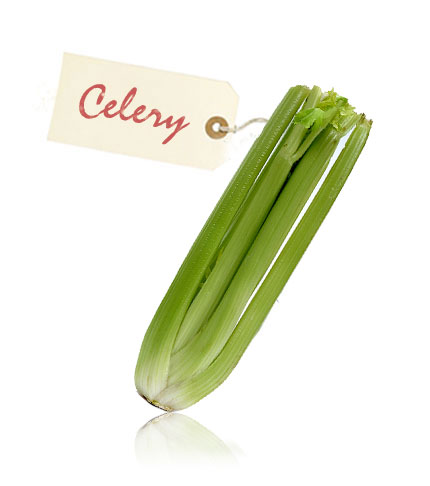
Who thinks this way? It is completely logical to me: Celery, iceberg lettuce, and other light green vegetables would not exist if they had no purpose.

Let me start off with saying that celery is a good source of fiber and a great low calorie snack. In addition to that, it has trace amounts of quite a few nutrients and contains a high amount of vitamin K.
Celery has shown to have antiviral and antimicrobial benefits. This is especially beneficial because there have been several bacterial infections associated with the risk of certain cancers, and viruses are now recognized as one of the leading causes of cancer.
Celery also contains lutein, which is a caratenoid. Studies show that high amounts of dietary lutein is correlated with reduced risk of colon cancer. Other foods that contain lutein include spinach, broccoli, lettuce, tomatoes, oranges, carrots, and greens. Lutein is also necessary for optimal eye sight.

Flavones; yet another wonderful thing found in celery. “The only important edible sources of flavones identified to date are parsley and celery.” Flavones show beneficial effects against atherosclerosis, osteoporosis, diabetes mellitus and certain cancers.
So the next time someone nay says you for eating celery, you can just smile because you know you’re going to live longer than them.


Now onto iceberg lettuce. Iceberg lettuce is another good source of vitamin K. In fact, women who consumed lettuce (iceberg or Romaine) one or more times per day had a 45% lower risk of hip fracture than women who consumed lettuce one or fewer times per week.
Interestingly enough, iceberg lettuce has a higher antioxidant content than green leaf Romaine lettuce! Iceberg lettuce is also a good source of polyphenols.
Furthermore, iceberg lettuce is incredibly high in choline. Choline is a micronutrient that helps with cell structure and function. It is a dietary source of methyl groups, which is important for cell replication. Choline is also needed for neural function as well as lipid transport and metabolism.
Spinach and Romaine lettuce may have a higher amount of nutrients that iceberg lettuce, but it doesn’t necessarily make them better, they’re just different. The point is getting a variety. Eating mostly spinach and romaine is great, but it certainly isn’t going to hurt you to throw some iceberg lettuce in there, in fact, it might even help.


So next time you get a sandwich with iceberg lettuce, instead of disdainfully saying, “Psh, there’s nothing even in this,” you should say, “I’m lucky that there’s lettuce in this sandwich! It’s good for me and it’s definitely better than no lettuce!”


References
Alan Crozier, Michael E. J. Lean,, Morag S. McDonald, and, Christine Black Quantitative Analysis of the Flavonoid Content of Commercial Tomatoes, Onions, Lettuce, and Celery. Journal of Agricultural and Food Chemistry 1997 45 (3), 590-595
Feskanich,, Diane, and Peter Weber. "Vitamin K intake and hip fractures in women: a prospective study." American Journal of Clinical Nutrition 69.1 (1999): 74-79. Web. 13 Jul 2010. http://www.ajcn.org/cgi/content/full/69/1/74?maxtoshow=&hits=10&RESULTFORMAT=&fulltext=iceberg+lettuce&searchid=1&FIRSTINDEX=0&resourcetype=HWCIT.
Halvorsen, Bente, and Monica Carlsen. "Content of redox-active compounds (ie, antioxidants) in foods consumed in the United States." American Journal of Clinical Nutrition 84.1 (2006): 95-135. Web. 13 Jul 2010. http://www.ajcn.org/cgi/content/full/84/1/95?maxtoshow=&hits=10&RESULTFORMAT=&fulltext=iceberg+lettuce+antioxidants&searchid=1&FIRSTINDEX=0&resourcetype=HWCIT.
Lampe, Johanna . "Spicing up a vegetarian diet: chemopreventive effects of phytochemicals." American Society for Clinical Nutrition 78.3 (2003): 579S-583S. Web. 12 Jul 2010. http://www.ajcn.org/cgi/content/full/78/3/579S?maxtoshow=&hits=10&RESULTFORMAT=&fulltext=celery+benefits&searchid=1&FIRSTINDEX=0&resourcetype=HWCIT.
Llorach, Rafael, and Francisco Tomás-Barberán. "Lettuce and Chicory Byproducts as a Source of Antioxidant Phenolic Extracts." J. Agric. Food Chem 52.16 (2004): 5109–5116. Web. 13 Jul 2010. http://0-pubs.acs.org.catalog.llu.edu/doi/full/10.1021/jf040055a.
Manach,, Claudine. "Polyphenols: food sources and bioavailability." American Society for Clinical Nutrition 79.5 (2004): 727-747. Web. 12 Jul 2010. http://www.ajcn.org/cgi/content/full/79/5/727?maxtoshow=&hits=10&RESULTFORMAT=&fulltext=celery+benefits&searchid=1&FIRSTINDEX=10&resourcetype=HWCIT.
Slattery, Martha, and Joan Bensen. "Carotenoids and colon cancer." American Society for Clinical Nutrition 71 (2000): 575–82. Web. 12 Jul 2010. http://www.ajcn.org/cgi/reprint/71/2/575?maxtoshow=&hits=10&RESULTFORMAT=&fulltext=celery+benefits&searchid=1&FIRSTINDEX=10&resourcetype=HWCIT.
Wikipedia Pages
http://en.wikipedia.org/wiki/Flavone#cite_note-1

Friday, July 9, 2010

My Fight with Fiber

Fiber. Fiber. Fiber. By now you’ve got the message. Eat more fiber.
“Fiber helps to lower cholesterol.”
“Fiber will reduce your risk of diabetes.”
“Fiber is associated with weight loss.”
Apparently fiber does more than just make you go to the bathroom. A high fiber diet has shown to have greater health benefits than any other diet. Fiber appears to reduce the risk of developing various conditions, including heart disease, diabetes, diverticular disease, and constipation. Fiber helps to lower cholesterol as well as stabilize blood glucose levels. And yes, it has shown to induce weight loss.
Oh precious weight loss. If I could just eat enough fiber… I could finally be thin… This is the thought of many misguided Americans.
So it’s time for us to start using our brains and figure out that a single component from food is not going to make us thin or healthy. Fiber is found in whole grains, fruits, vegetables, legumes, and nuts. Eating fiber from whole foods (meaning unprocessed food) will provide you with essential vitamins and minerals as well as antioxidants and phytochemicals. These fiber-containing super foods do not have processed sugars, enriched flour, artificial sweeteners, trans fat, preservatives, or hidden agendas.
Now that fiber is being publicized as the savior of food, people can’t get enough of it. People are buying products crammed with fiber. Fiber One offers cereal, granola bars, yogurt, and even cottage cheese, packed full of fiber. You can get 35% of your fiber in one granola bar! If you ate a serving of Fiber One cereal, a granola bar, and a yogurt, you would exceed 100% of your daily fiber requirement!
Kellogg’s offers a Special K fiber-filled drink mix. Not only does it contain 5 grams of fiber, but it also contains 5 grams of protein! So if you are not getting enough protein on your low-carb fiber-enhanced fad diet, go ahead and guzzle one of these!
The people buying these products are missing the point. It’s not just about fiber! It’s about the whole food. One of the reasons fiber is so good for you is because of the package it comes in, and I’m not talking about a cardboard box or a pill bottle. For example, apples are a great source of fiber, but they’re also a good source of vitamin C and tannins!
Most processed foods contain ingredients you don’t really want. Let’s take a look at all the extra goodies we’re getting in our fiber.
Strawberry Kiwi Protein Water Mix
Ingredients
POLYDEXTROSE, WHEY PROTEIN ISOLATE, CITRIC ACID, NATURAL AND ARTIFICIAL FLAVOR, CONTAINS TWO PERCENT OR LESS OF SOY LECITHIN, SUCRALOSE, ETHOXYLATED MONO- AND DIGLYCERIDES, TRICALCIUM PHOSPHATE, ACESULFAME POTASSIUM, RED #40, NIACINAMIDE, PYRIDOXINE HYDROCHLORIDE (VITAMIN B6), VITAMIN B12. SWEETENED WITH NONNU TRITIVE SWEETENERS.


Hopefully when you read through that long list of ingredients, you saw high fructose corn syrup, sucralose, artificial flavoring, and preservatives. Are these really things you want to be putting in your body?
If you’re looking for ways to be “healthy” this is not the best way to go, but it is also not the worst. Given the choice between Fruit Loops and Fiber One, I’d choose Fiber One every time. But as far as optimal health goes, you should stick with oatmeal, shredded wheat, Grape Nuts, or even Cheerios.
Following the “better out than in” motto is not going to work with essential nutrients such as zinc, iron, and copper. Eating a diet that is too high in fiber could actually cause vitamin or mineral deficiencies. Think about it. If you are eating predominantly fiber and pushing everything out, you aren’t giving your body enough time to absorb essential nutrients. Now, this is not going to happen when you’re eating fiber that is packaged in delicious fruits and vegetables. This can happen when you’re supplementing fiber.
Curious about how much fiber you should be getting? The average woman should be getting about 20-25 grams a day and the average man should be getting about 30-35 grams a day.
Let me put it in perspective:
Breakfast: Oatmeal, apple, soy milk
Lunch: Avocado sandwich (on whole wheat bread) and carrots and hummus
Dinner: Brown rice, kidney beans, and broccoli
That’s 42 grams of fiber. It is not difficult to get enough fiber in your diet.
You don’t need to pop fiber tablets like candy or buy fiber enriched foods. All you need to do is eat whole grains like whole wheat bread, whole wheat pasta, or brown rice, start incorporating more vegetables in your diet, substitute beans and legumes for meat, and start snacking on nuts or fruit instead of chips. Meat, candy, potato chips, crackers, cookies, ice cream, milk, eggs, or anything that is not a plant, will not give you fiber.
Understand that I absolutely love fiber, but from the right source. I think food is only worth eating if it contains fiber.
If there is a day where you’re feeling a little congested, I suggest you sprinkle psyllium on your cereal and drink lots of water. That’ll clear you right up :)

Calculate how much fiber you ate today!
http://www.fullplatediet.org/fiber-calculator/